
Picture a quiet evening in Cedar Creek. The sun is going down over your land. Your truck is parked in a big, clean shop. A few steps away, you walk into a warm, bright kitchen. It is all under one roof. That is the dream of a barndominium.
But a barndominium is not just a metal barn with rooms inside. It takes good planning to turn a steel shell into a home that feels cozy, stays cool in summer, and works well for years. Whether you are comparing barndominium builders in Buda, TX or planning a home in Cedar Creek, the best barndominiums start with a clear plan, long before the first post goes in the ground.
In this guide, we will walk you through each step, from planning to move-in day.
Call Ambassador Builders at (512) 387-6592 to discuss your barndominium plans.
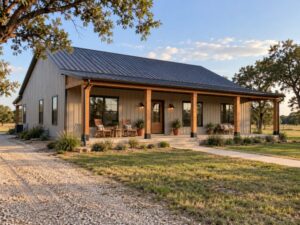
Why Do People in Cedar Creek Choose a Barndominium?
Cedar Creek has open land, big skies, and room to spread out. Many lots here are bigger than city lots. That makes a barndominium a great fit.
People like barndominiums because they can:
- Put a home and a shop under one roof
- Get big, open living spaces
- Leave room to grow later
- Pick a layout that fits how they really live
A barndominium can work for a young family, a retired couple, or someone who runs a business from home.
Step 1: Start With a Clear Plan
Good planning saves time and money. Before you build, sit down and think about how you will use the space each day.
Ask yourself:
- How many bedrooms and baths do we need?
- How big should the shop or garage be?
- Do we want a home office or guest room?
- Do we want a big porch for Texas evenings?
- Will we need more space in five or ten years?
Your builder and design team should help turn these answers into a floor plan. This is also the time to set your budget. Knowing your budget early helps you make smart choices about size, finishes, and extras.
Step 2: Check Your Land and Local Rules
Every piece of land is different. Requirements depend on your exact lot and the authorities that oversee it, including whether it is inside or outside city limits.
Do not guess about these rules. Before you build, check:
- Permits: Confirm which permits and approvals apply to your lot with the relevant local authorities.
- Deed rules: Some lots have HOA rules or deed limits on metal buildings, size, or looks.
- Septic: If your lot needs an on-site septic system, confirm site suitability and the approval process before finalizing the layout.
- Flood zones: Check whether any part of your land is in a mapped flood hazard area and what that means for the project.
- Setbacks: Confirm applicable distances from roads, property lines, utilities, and other site features.
Confirm who will research and handle each item for your exact lot. Addressing these questions early helps reduce surprises halfway through the job.
Step 3: Get the Site Ready
Once the plan is set, the land must be ready. Site work may include:
- Clearing trees and brush
- Grading the land so water drains away from the home
- Testing the soil
- Building a driveway so trucks can reach the site
- Planning where water, power, and septic lines will go
Central Texas can get heavy rain. Good drainage helps protect your foundation for years to come.
Step 4: Build the Shell
The shell is the outside frame of your barndominium. It often includes the slab, the steel or wood frame, the roof, and the outside walls.
Here is a key tip: plan the inside before the shell goes up. Doors, windows, plumbing spots, and roof lines all affect the rooms inside. If you build the shell first and plan the rooms later, you may have to cut, patch, or move things. That costs extra.
This is called shell-to-living-space coordination. It just means the outside and inside are planned as one home, not as two separate jobs.
Step 5: Plan Your Insulation the Right Way
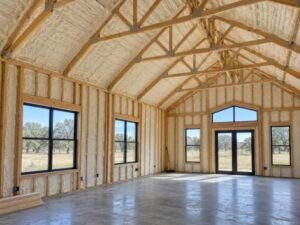
Insulation is one of the most important parts of a barndominium home. Metal walls and roofs can get very hot in a Texas summer. Without good insulation, your home may feel hot, and your power bill may climb.
The insulation and air-sealing design also needs to address condensation. When warm, moist air reaches a cool surface, water can form. Over time, moisture problems can contribute to mold or rust.
Common choices include:
- Spray foam: Can provide insulation and air sealing when properly selected and installed; moisture control depends on the foam type and the full assembly.
- Batt insulation: A lower-cost choice for some wall areas, with separate air-sealing and moisture-control details as needed.
- Rigid foam boards: Often used in certain wall or roof assemblies.
Discuss the right mix with your builder and design team based on your design, budget, and comfort goals. When comparing options with barndominium builders in San Marcos, TX or Cedar Creek, consider the full insulation and moisture-control plan rather than the product alone.
Step 6: Plan the Utilities Early
Utilities are what make your barndominium work. They need to be planned before walls and floors are closed in.
Think about:
- Water: Will you use a public water line or a well? Check what is available at your lot.
- Power: Find out where the closest power line is and what it costs to connect.
- Septic: If no sewer line is nearby, you will likely need a septic system.
- Heating and cooling: Pick a system sized for your home and your insulation.
- Internet: Rural areas may have fewer choices, so check early.
Plumbing lines often go into the slab. So they must be planned before the concrete is poured.
Step 7: Follow the Right Build Order
Building in the right order keeps your project on track. A common order looks like this, with required inspections scheduled before work is covered:
- Plans, design, and permits
- Site prep and utility planning
- Foundation and in-slab plumbing
- Frame, roof, and outside walls
- Windows and doors
- Rough plumbing, wiring, and HVAC
- Insulation
- Drywall and interior wall finishes
- Floors, cabinets, paint, and fixtures
- Final checks, applicable approvals, and move-in
Skipping a step or doing things out of order can cause delays and extra cost.
Choosing Barndominium Builders in Cedar Creek, TX
A barndominium gives you space, freedom, and a home that fits your life. But the best results come from careful planning. From the shell to the insulation to the utilities, every step should work together.
When choosing a specialty home builder, ask how site requirements, shell design, insulation, and utilities will be coordinated. Confirm the scope, responsibilities, and construction schedule in writing.
Ready to discuss your barndominium? Call Ambassador Builders at (512) 387-6592 today.
FAQs
1. How long does it take to build a barndominium in Cedar Creek, TX?
It depends on the home size, design, weather, and permits. Your builder can give you a timeline once your plans and lot are reviewed.
2. How much does a barndominium cost to build?
Cost depends on size, site work, foundation, utilities, insulation, and finishes. A builder can prepare an estimate after reviewing your plans and land.
3. Do I need a permit to build a barndominium in Bastrop County?
The requirements depend on your exact lot and the work proposed. Confirm applicable permits and approvals with the relevant authorities, and review any HOA rules or deed restrictions before building.
4. What is the best insulation for a metal barndominium?
There is no single best choice for every design. Spray foam, batts, and rigid foam can each be part of a suitable assembly. The choice should account for insulation value, air sealing, condensation control, budget, and installation requirements.
5. Can I add a shop or garage to my barndominium?
Yes. Many barndominiums include a shop, garage, or workspace under the same roof. Plan this early so it fits the layout and allows for appropriate separation, ventilation, and fire-safety details.
6. Can a barndominium use a well and septic system?
Yes, where the site is suitable and applicable requirements allow it. Confirm water availability, septic suitability, spacing, and any required approvals before finalizing the home’s location and layout.