
A custom luxury home comes together through hundreds of decisions. Some are easy to see, like the kitchen cabinets or the shape of the porch. Others, like where the house sits on the land or how the trades coordinate before drywall, can make just as much difference to how the home feels and works.
Ambassador Builders is based in Cedar Creek, TX. If you’re planning a custom home here, this guide explains how to fit the design to your land, read the specifications, budget for selections, and decide what to check as the home takes shape.
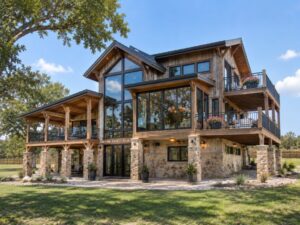
Start With How You Live
Before settling on a floor plan, think about a normal day. Who cooks? Where do guests gather? Does someone work from home? Where do groceries, backpacks, and muddy shoes come in?
Those answers shape room sizes, storage, window placement, and how rooms connect. If you eat outside often, a short route from the kitchen to the patio may matter more than a larger dining room. If you work from home, an office away from the main living area may make the house easier to live in. Settle those priorities before the drawings are final.
Make the Home Fit the Land
A Cedar Creek lot may give you room for a wide porch, views of the trees, or more privacy. It can also bring decisions about slope, drainage, and the cost of reaching the house with a driveway and utilities. Review these details before finalizing the design:
- Sun and shade: Consider which rooms and outdoor spaces will get strong afternoon sun and where shade would make them more comfortable.
- Drainage: Look at how water moves across the property and how grading can direct it away from the home.
- Trees and views: Decide which trees you want to keep and which views you want to frame. Leave space for the driveway and construction access.
- Access and utilities: Check how the driveway, electric service, water, and sewer or septic will reach the building site.
- Privacy: Place windows, porches, and outdoor living areas with nearby roads, neighbors, and sightlines in mind.
Walk the property with the floor plan in mind. The best location for the house may depend as much on drainage and utility access as on the view.
Specifications: The Details That Define Quality
Specifications, or specs, describe the materials, products, and performance requirements included in your home. They can cover everything from framing, roofing, and insulation to HVAC equipment, plumbing fixtures, cabinets, and countertops. Where selections are final, list the product and relevant ratings. Where a choice is still open, identify the allowance or selection criteria.
For example, “energy-efficient windows” leaves room for interpretation. A useful specification identifies the window and lists its U-factor and solar heat gain coefficient (SHGC). U-factor describes how readily heat passes through the window; SHGC describes how much heat from sunlight enters. Compare those ratings alongside window placement, exterior shade, insulation, and HVAC sizing.
Allowances: Know Your Numbers Early
An allowance is an amount included in the contract for an item you’ll choose later, such as tile, lighting, plumbing fixtures, or appliances. Ask what it covers. A tile allowance might cover the tile itself, while labor, trim pieces, or delivery are priced separately.
If you choose something that costs more or less than the allowance, the contract determines how the difference is handled and whether markup applies. Visit showrooms early and price a few choices you’d actually buy. That will tell you whether your allowance covers the finishes you want.

Change Orders: Plan for Them, Don’t Fear Them
A change order records a revision to the agreed work after the contract is signed. It might cover a larger closet, a different tile, or an extra outlet on the patio. Before the affected work starts, put these details in writing:
- What’s being added, removed, or revised
- What the change costs or credits back
- How it affects the schedule, if at all
- Who must approve the change under the contract
Timing matters. Moving a wall on paper is usually easier than moving it after the wiring and drywall are in place. Make decisions that affect framing, plumbing, wiring, or long-lead materials as early as you can.
For more on comparing proposals and documenting decisions, see our guide to planning a custom luxury home in Taylor, TX.
Craftsmanship Checks at Every Stage
A crooked trim line or an uneven tile edge is easy to spot. Other details are harder to see once the work is covered. Ask what will be checked, who will review it, and how any issues will be documented.
- Foundation and framing: Review foundation details before the pour and check wall layout and openings against the plans.
- Before drywall: Review the locations of plumbing, electrical, HVAC, and any smart home wiring while those areas are accessible.
- Finishes: Look at cabinet alignment, trim joints, tile edges, flooring transitions, doors, and paint.
- Final walkthrough: Try the fixtures and controls included in the review. Record any remaining items on a punch list and agree on who will address them and when.
Trade coordination matters when several systems share the same space. For example, settling duct and lighting locations before framing is closed can help prevent conflicts in a ceiling or hallway.
Why Build With a Local Cedar Creek Builder
Ambassador Builders is based in Cedar Creek and serves Bastrop, Austin, Elgin, Manor, Kyle, Buda, Lockhart, and nearby communities. Our custom home process includes site assessment, design coordination, construction management, progress updates, and a final walkthrough.
Ready to plan your custom luxury home in Cedar Creek, TX? Call Ambassador Builders at (512) 387-6592 to talk about your land, ideas, and budget.
Frequently Asked Questions
1. How much does it cost to build a custom luxury home in Cedar Creek, TX?
Cost depends on the size, design, site work, utility connections, materials, and finishes. Ask for an estimate based on your lot and plans, with allowances and exclusions shown so you can see what the price covers.
2. How long does it take to build a custom luxury home?
The timeline depends on the design, permitting, site work, material availability, and how quickly selections are made. Ask for a schedule that separates design and approvals from construction.
3. Can I build a luxury home on acreage in Cedar Creek?
It may be possible if the parcel supports your plans. Review slope, drainage, driveway access, utilities, and any restrictions before finalizing the design. The amount of site work can affect both the budget and where the house can sit.
4. What is an allowance in custom home building?
It’s an amount included in the contract for an item you’ll select later, such as flooring, lighting, or countertops. The contract explains what the allowance covers and how costs above or below it are handled.
5. What is a change order, and does it cost extra?
A change order records a change to the agreed work. It can increase or decrease the price and may affect the schedule. Get those details in writing and follow the contract’s approval process before the affected work starts.
6. How do I know my builder is doing quality work?
Ask which checks are included and when they happen, especially before drywall covers the work. When you visit a completed home, look closely at trim joints, cabinet alignment, tile edges, and floor transitions. Those details show how carefully the finishes were installed.